

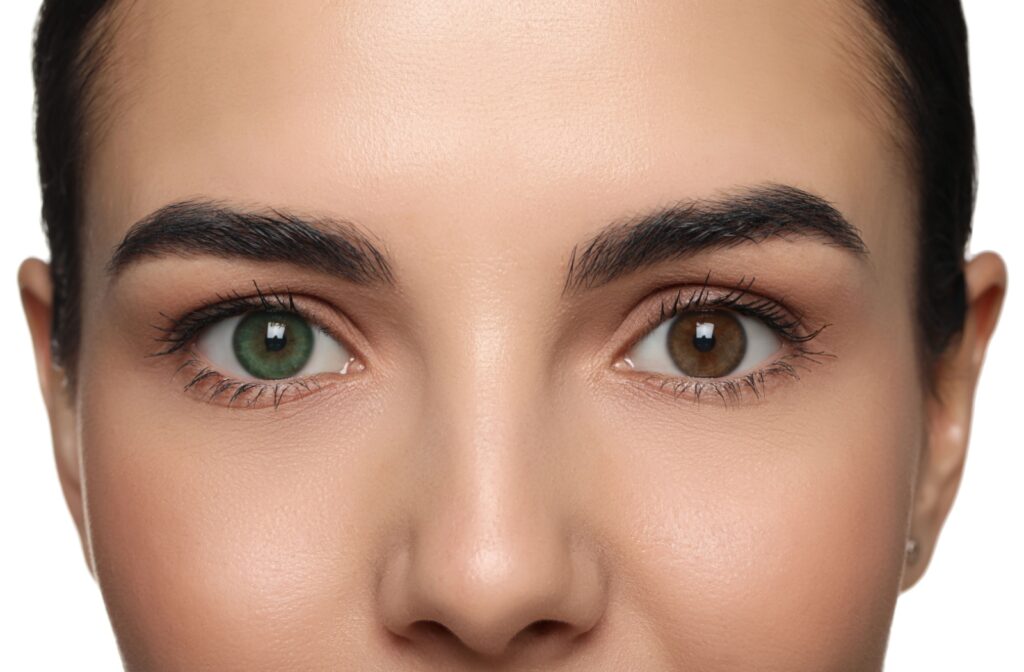
You may have heard that your eyes can shift color when you feel a strong emotion, like happiness or anger. It’s a romantic idea that our deepest feelings are reflected in our eyes—an organ that we, as optometrists, are passionate about protecting.
While intense emotions can make your eyes look different, this is more of a temporary illusion than a true transformation. Your mood doesn’t permanently alter the pigment of your eyes, but it can trigger physical responses that affect your eyes’ appearance for a short time. Understanding how this happens can help you understand what’s normal for your eyes and what diseases can be detected in an eye exam.
What Gives Your Eyes Their Unique Color
The Role of the Iris & Melanin
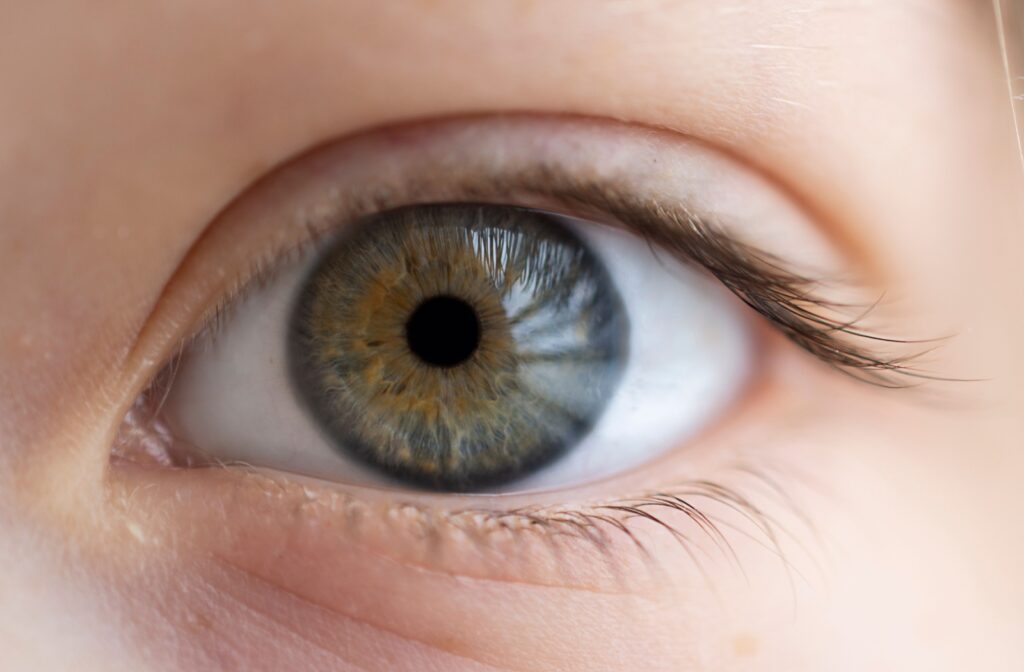
The color of your eyes comes from your iris, the colored ring surrounding your pupil, which is black. The amount of a natural pigment (called melanin) in your iris determines if your eyes are brown, blue, green, or a shade in between. A greater amount of melanin creates a darker eye color, like deep brown, while less melanin results in lighter colors like blue or green.
How Eye Color Develops
Many babies are born with blue or gray eyes that may darken over their first few years. This change is a normal part of infant vision development, as baby’s bodies produce more melanin after birth. By around age three, a child’s eye color is usually set for life, though very small, gradual changes can still happen over many years.
Do Emotions Like Anger or Love Change Eye Color?
How Your Pupils React to Strong Feelings
When you experience intense emotions like fear, excitement, or love, your body can have a noticeable physical reaction. Your pupils—the black dots in the center of your eyes—can change size in response to these feelings. They often get larger, a process called dilation, when you’re feeling a rush of emotion.
Pupils, Light, & Perceived Color
When your pupils get bigger, the colorful part of your iris gets squeezed together. This can make the pigments in your iris appear more concentrated and therefore darker or more intense. While your actual eye color isn’t changing, the way it looks can shift temporarily because of how light interacts with your compressed iris.
Other Factors That Seem to Change Your Eye Color
The Effect of Different Lighting
Your eye color can look different in natural sunlight compared to dim, indoor light. For example, hazel eyes might look more brown in low light, but may have green and gold flecks when outdoors.
How Clothing & Makeup Can Influence Eye Shade
The colors you wear can also create an illusion of change in your eye color. For instance, wearing a green shirt might make the green flecks in your hazel eyes stand out more. The same is true for makeup and even the color of your eyeglass frames: certain shades can contrast or complement your natural eye color, making it appear more vibrant.
When an Eye Color Change Is a Health Signal
Natural Changes Over Time
It’s common for eye color to change slightly during puberty, pregnancy, or later in adulthood. These shifts are usually slow, subtle, and happen in both eyes at the same time. However, a sudden or significant change, especially if it’s only in one eye, is a different matter.
Signs of a Potential Eye Health Issue
If you notice a dramatic change in the color of one or both of your eyes, it’s a good idea to pay close attention, as this could be a signal of an underlying eye health issue. Look for other signs that may appear with the color change, such as:
- Pain or redness
- Blurry vision
- A cloudy appearance, which may indicate cataracts
- A change in pupil size in one eye, which could be related to several conditions, including glaucoma
What to Do If You Notice a Change in Your Eyes
Observe the Change
Take note of what you see when you notice a change. Is the new color in one eye or both? Did it happen suddenly or over a longer period? This information can be very helpful for your eye care provider when you discuss your concerns.
Schedule an Exam with an Eye Doctor in Pleasanton
Any abrupt or one-sided change in eye color is a reason to schedule a comprehensive eye exam. As your eye doctor in Pleasanton, we can take a close look at your eye health and help determine the cause of the change. Proactive eye care is a great way to help keep your vision clear and your eyes healthy for years to come.
At Total Vision Pleasanton, we’re dedicated to helping you understand and protect your eye health. If you have concerns about changes in your eye color or it’s time for a routine check-up, we invite you to schedule an appointment with our team. We look forward to seeing you.