
Your child’s eyes keep growing long after their first birthday. The shape of the eye, the strength of its focusing muscles, and the way both eyes work together all keep developing through the school years, which is one reason a prescription can change so fast.
Bad vision at a young age usually comes from a mix of refractive errors, eye alignment problems, and daily habits that shape how the eyes develop.
Small problems often go unnoticed. A child who has never seen sharp letters on a whiteboard has no reason to say anything feels off, and that quiet start can affect reading, sports, and playtime with friends.
Refractive Errors in Children
For an image to look sharp, light has to land right on the retina at the back of the eye. When the eye grows a little too long or the cornea curves unevenly, light lands slightly off target and things look blurry. This is called a refractive error. Here’s how that tends to show up in kids:
- Myopia, or nearsightedness, makes far-off things look blurry.
- Hyperopia, or farsightedness, makes close work harder to focus on and can leave kids tired during homework.
- Astigmatism blurs vision at every distance.
Prescriptions can change quickly during growth spurts. Glasses that worked in 2nd grade may not be enough by 4th, and most kids won’t mention the difference.
Eye Alignment and Focus Problems
Some children see clearly with each eye but struggle to use both as a team. Reading gets tiring, and words can seem to move on the page. A few things can cause that:
- Strabismus, or crossed eyes, means the eyes point in different directions.
- Amblyopia, or lazy eye, happens when the brain starts favoring one eye over the other.
- Convergence insufficiency makes it hard for the eyes to turn inward for close reading.
- Weak eye tracking can cause a child to lose their place mid-sentence.
Amblyopia may respond better to treatment while vision is still developing, so bring your child in early rather than waiting to see if it sorts itself out.
Everyday Habits That Affect Children’s Vision
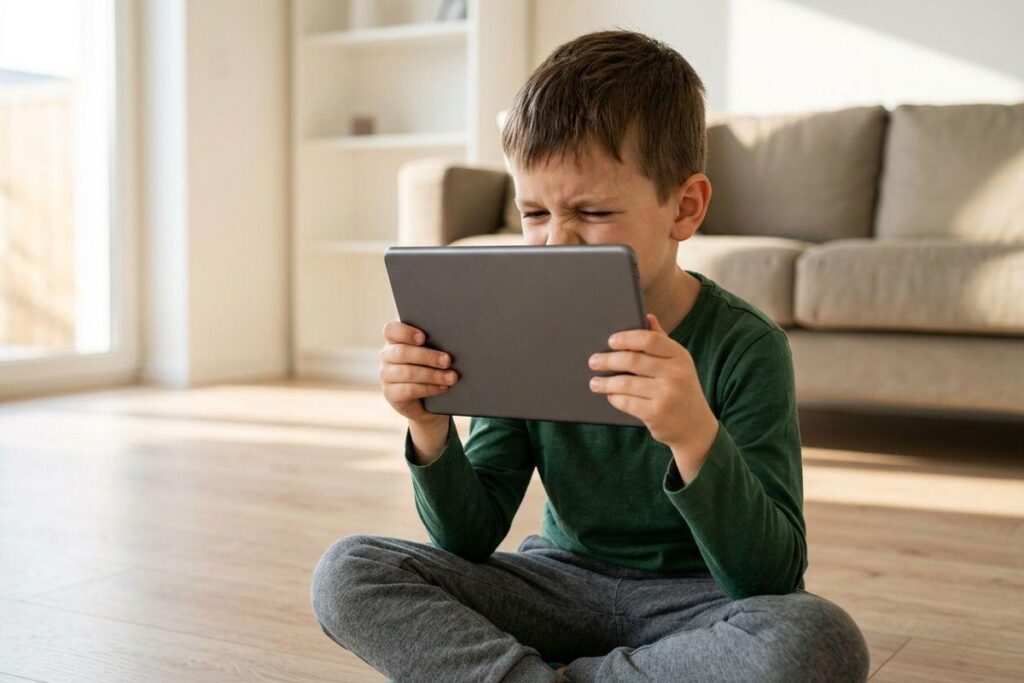
How your child spends the day matters. Hours on a tablet or phone keep the eyes locked on something close, which can strain focus and leave them dry and tired by evening. Try the 20-20-20 rule at home: every 20 minutes, look at something 20 feet away for 20 seconds.
Food plays a part too. Meals low in vegetables and healthy fats give the eyes fewer of the nutrients they use, so work in leafy greens, eggs, and fish where you can. And send them outside when the weather allows. Natural light and looking at distant things give the focusing muscles a break they rarely get indoors.
Family History
Genes set the stage before habits come into play. A child with one nearsighted parent has a higher chance of becoming nearsighted, and that chance climbs when both parents are.
Family history doesn’t decide the outcome. It does tell us how closely to watch and how often to check in.
Signs Your Child May Have Vision Trouble
Kids rarely announce that they can’t see well. They show it through small actions you can notice at home or hear about from a teacher:
- Frequent squinting or rubbing of the eyes.
- Sitting close to the television or holding books right up to their face.
- Headaches after school or after reading.
- Trouble copying notes from the whiteboard.
- Covering or closing one eye to focus.
One of these on its own may not mean much. Several together are worth a closer look, and sorting it out early can make schoolwork and play feel easier.
Children’s Eye Exams and What They Cover
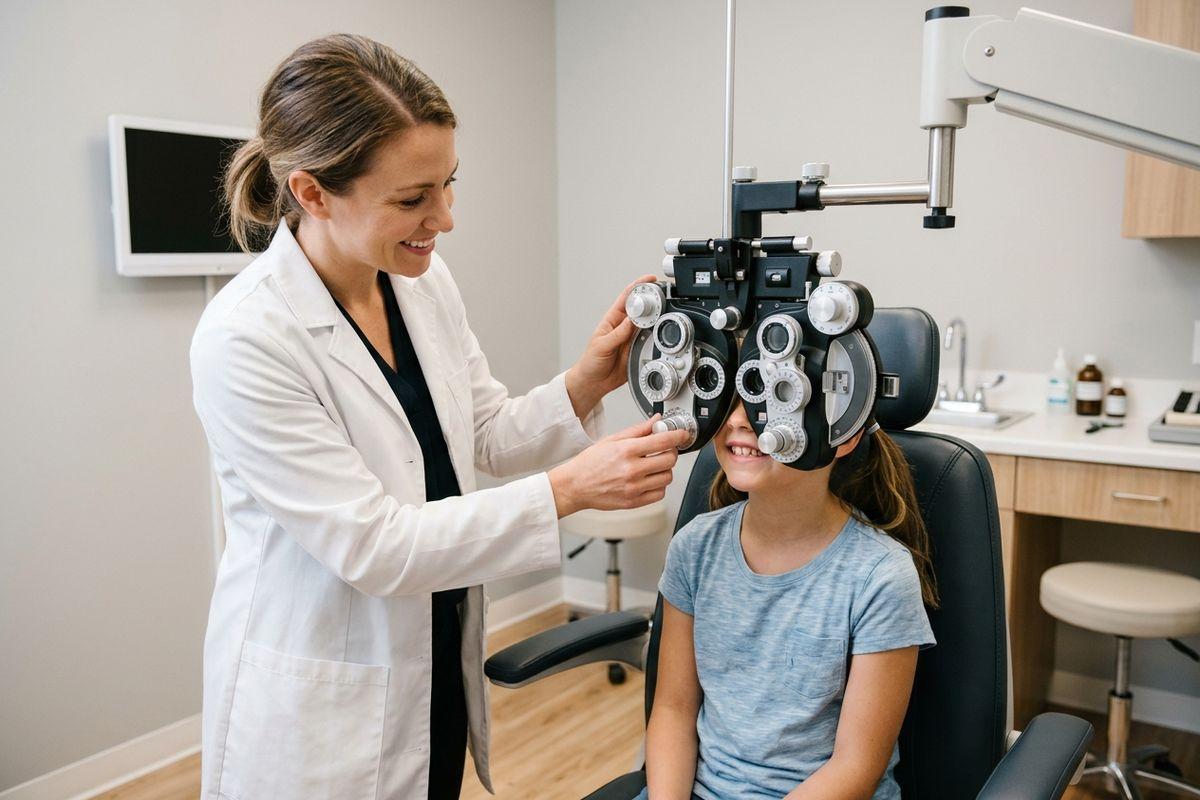
Regular exams give us a clear picture of how your child’s eyes are growing over time. An optometrist in Pleasanton can check focus, alignment, and eye health using gentle tests built for young kids, including ones that don’t ask them to read a single letter.
Follow a simple schedule:
- Book a first exam between 6 and 12 months old.
- Schedule another before kindergarten, around age 3.
- Keep up yearly exams through the school years.
- Come in sooner if squinting, headaches, or slipping grades show up.
These visits do more than measure eyesight. We track year-to-year patterns, note small changes as they appear, and walk you through options like glasses, vision therapy, or myopia control when they fit your child.
Help Your Child See the School Year Clearly
Children adapt to blurry vision without complaining, so the first hint usually comes from their behavior rather than their words. An exam can help you find out what’s happening and what to do next. Total Vision Pleasanton is here for your family’s eyes at every age. Book your child’s next eye exam and give them a clearer view of the classroom, the field, and everything in between.