


Dry, gritty eyes usually get blamed on a long day or a short night. A lot of the time, that’s exactly what’s behind it. When the scratchiness keeps coming back week after week, though, your tears are worth a closer look.
Dry eye syndrome happens when your eyes don’t produce enough tears, or when the tears they do produce evaporate too fast to keep the surface of the eye comfortable.
You feel it in ordinary moments. Reading tires you out sooner than it used to, and contact lenses stop sitting the way they should. Screens make things worse, since we blink far less when we’re locked onto a monitor, which is why digital eye strain and dry eye tend to appear together.
Signs and Symptoms to Watch For
Dry eye doesn’t always feel dry. Sometimes it feels like an eyelash you can’t find. Sometimes your eyes water constantly, flooding the surface to compensate for tears that aren’t doing their job.
Keep an eye out for symptoms that stick around:
- Burning or stinging that builds through the afternoon
- A gritty sensation, like sand under your eyelid
- Redness that doesn’t settle down after rest
- Blurry vision that clears for a second when you blink
- Sensitivity to bright light or wind
Bring these up at your next visit instead of waiting them out.
Why Tears Stop Doing Their Job
Your tear film involves more than water. An oily outer layer slows evaporation, while the watery layer underneath rinses and hydrates the surface of your eye.
Problems generally fall into 2 categories. In the first, your eyes simply don’t produce enough of that watery layer, which often connects to aging, certain medications, and conditions like Sjögren’s syndrome.
The second involves the oil. When the small meibomian glands along your eyelid margins clog up, the oily layer thins out and your tears evaporate before they can do much good.
What Raises Your Risk
Some contributors respond well to a few adjustments. Others come with the territory.
These factors tend to make dry eye more likely:
- Age, since tear production often decreases after 50
- Hormonal changes during pregnancy or menopause
- Medications such as antihistamines, decongestants, and some antidepressants
- Dry, windy, or heated indoor air
- Wearing contact lenses for long stretches
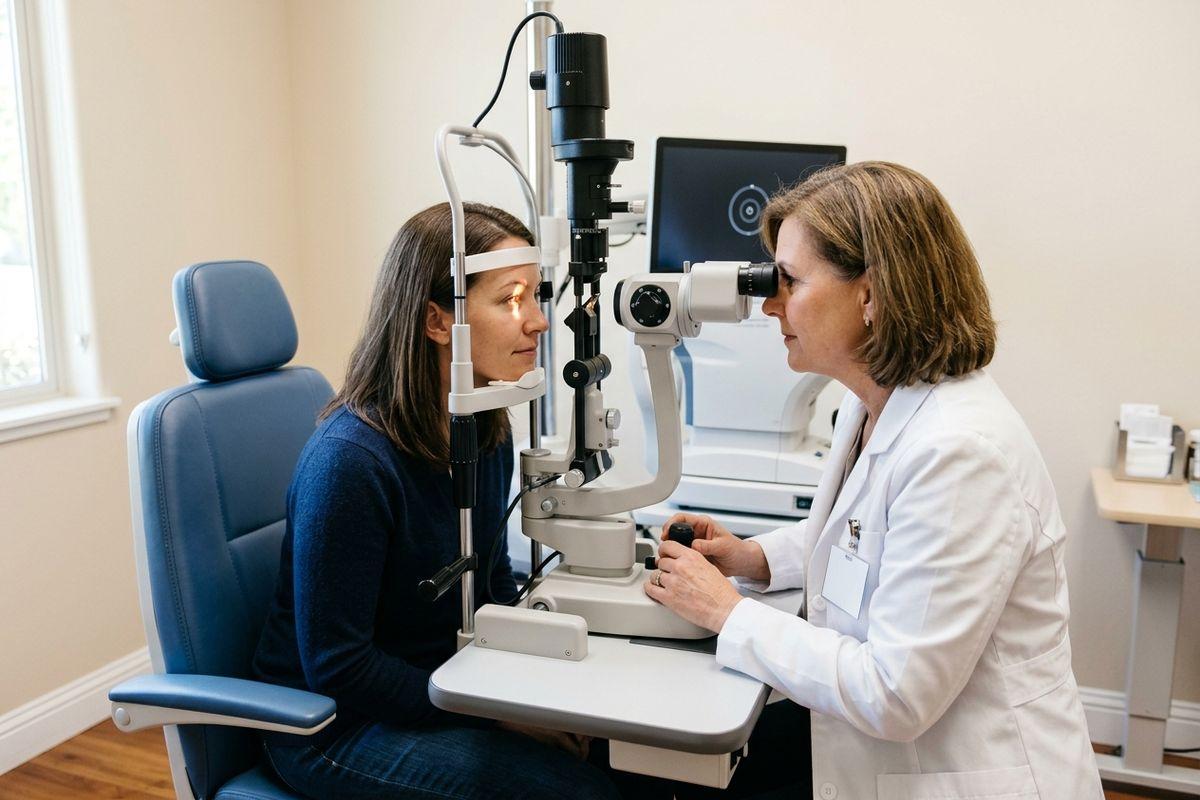
How an Eye Doctor in Pleasanton Diagnoses Dry Eye
Diagnosis starts with a conversation. Your optometrist will ask about your medications, your work setup, and how long the irritation has been going on, and that context shapes everything that follows.
A comprehensive eye exam can then include a few quick measurements:
- A tear volume test, where a small paper strip measures how much moisture your eyes produce in a set amount of time
- A dye test that tints the tear film so your optometrist can watch how quickly it breaks up
- A magnified look at your eyelid margins to see whether the oil glands are blocked
These checks are quick, and they help your optometrist match a plan to what your eyes actually need.
Treatment Options for Dry Eye
What helps depends on which layer of your tear film needs support, so bring up the options that match what your exam turns up:
- Prescription drops that reduce inflammation on the surface of the eye
- Punctal plugs, tiny inserts that slow how quickly tears drain away
- In-office gland expression or light therapy to clear blocked oil glands
- Scleral lenses, which hold a small reservoir of fluid against the cornea and can suit contact lens wearers dealing with dryness
Give any new approach a few weeks before you judge it. Tear film changes take time, and your optometrist may adjust the plan once you report back.
Small Habits That Support Your Tears
Reach for a warm compress in the evening. Hold a warm, damp cloth over closed eyes for 5 to 10 minutes to soften the oil sitting in the glands, then clean your lids with a mild cleanser.
Choose preservative-free artificial tears and skip anything sold as a redness reliever, because regular use can leave your eyes more irritated than when you started.
Then look at your surroundings. Point car vents and fans away from your face, run a humidifier during dry months, and follow the 20-20-20 rule at your desk: every 20 minutes, look at something 20 feet away for 20 seconds.
Diet plays a supporting role. Omega-3 fatty acids from salmon, sardines, or ground flaxseed may help the oily layer of your tears hold together.
Take the Next Step for Comfortable Eyes
Dry eye rarely resolves on its own, and pushing through it usually means more of the same next week. A little detective work goes a long way here.
Notice when your eyes feel worst and bring that to your appointment. Time of day, screen hours, medication changes, and the season all give your optometrist something concrete to work with.
Total Vision Pleasanton can evaluate your tear film and walk you through treatment that fits your routine. Book your appointment and let’s get your eyes feeling more like themselves.